




Two Types of Solar Charge Controllers: MPPT and PWM
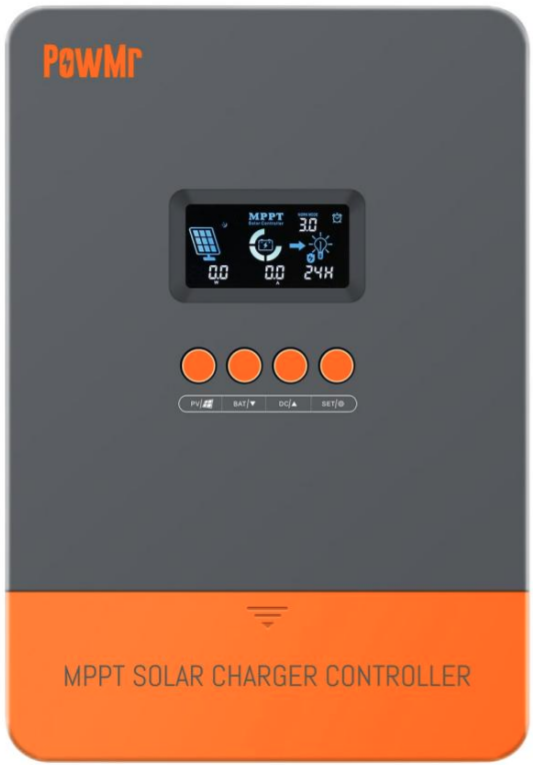
1. SM-312-60A: MPPT Solar Charge Controller
==================================
Maximum Power Point Tracking (MPPT) is an electronic
DC-to-DC conversion technique used in solar photovoltaic systems to
optimize the power harvested from solar panels under changing
sunlight and temperature conditions.
Recommended Application
For compatible 48VDC battery systems and solar arrays within the
controller’s specified voltage and power limits.
This 60A MPPT charge controller is designed for compatible
12V, 24V, 36V, or 48V battery systems. Confirm the controller’s
specifications before connecting your equipment.
For a compatible 48VDC solar air-conditioning system, solar power
can supply the DC load while the controller charges the battery
with available surplus power, subject to the system wiring and
equipment design.
Important: A standard solar charge controller
does not automatically switch power between a battery and an
air conditioner unless the system includes the required
switching or power-management equipment.
Specifications
- Dimensions: 8.43 × 4.53 × 1.97 inches
- Weight: 2.65 lb
- Maximum PV input power: 2,800W for the specified 48V system
- Maximum PV input voltage: 190V, subject to the manufacturer’s specifications
Solar Panel Configuration Examples
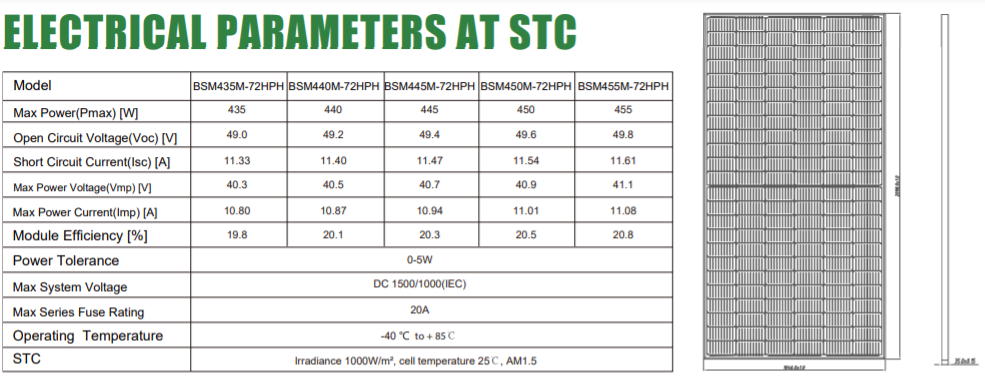
- 3 × 455W panels: 1,365W total
- 4 × 455W panels: 1,820W total
Check the panels’ maximum open-circuit voltage (Voc), including
the temperature-related voltage increase in cold weather, before
connecting panels in series. Do not exceed the controller’s
maximum PV input voltage.
Product Images

How Does an MPPT Solar Charge Controller Work?
- Finding the maximum power point:
The controller adjusts the electrical operating point of the
solar array to capture available power as sunlight and
temperature change. - Converting voltage into charging current:
An MPPT controller can convert suitable higher-voltage solar
input into lower-voltage battery charging power. Actual gains
depend on the panels, battery, conditions, and controller. - Tracking changing conditions:
The controller uses electronic control algorithms to respond
to changes in sunlight, shading, and panel temperature.
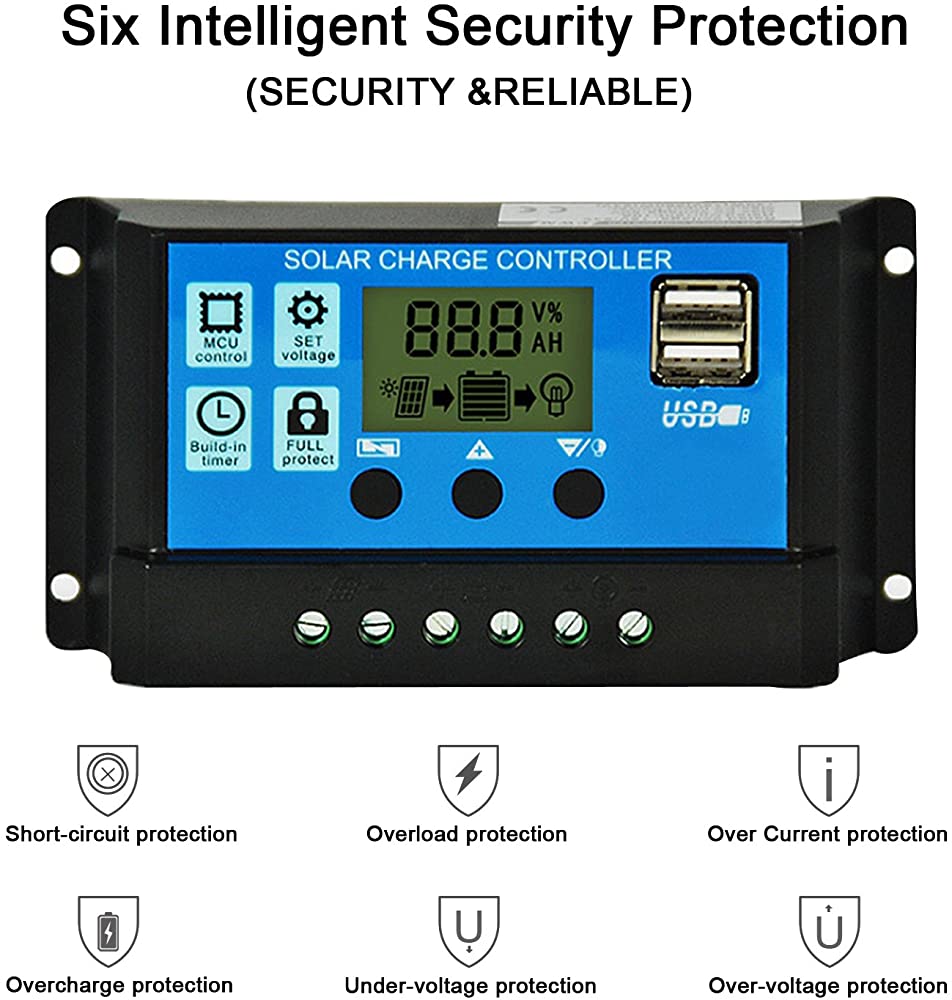
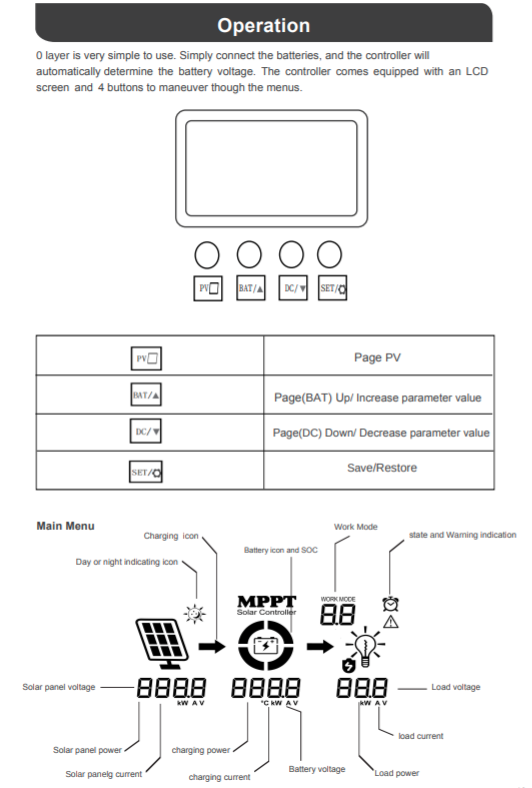
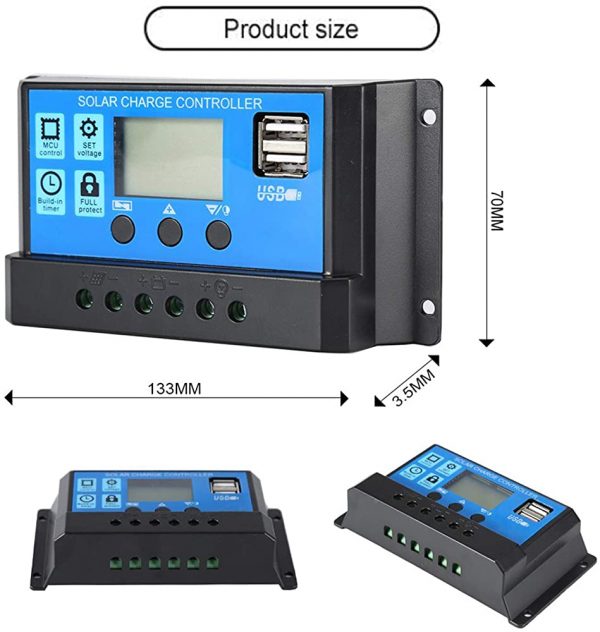
2.SM-314-20A: A PWM Solar Charge Controller
A PWM (Pulse Width Modulation) solar charge controller regulates the voltage and energy sent from a solar panel to a battery by acting like a fast electronic switch that opens and closes multiple times per second
For a 24V System – < 480W Battery system
With 24V batteries, the maximum panel voltage must not exceed 50V
Storage Temperature: -35 ~ +60C

- Voltage Matching: It forces the solar panel to operate near the battery’s voltage as the battery fills up, shortening the electrical pulses to taper off the charge.
- 3-Stage or 4-Stage Charging: It typically uses Boost, Absorption, Equalization, and Float stages to protect lead-acid, AGM, Gel, or LiFePO4 batteries from overcharging.
- Installation Rule: Always connect the battery first before attaching the solar panels so the controller correctly detects the system voltage (e.g., 12V or 24V)
3.MPPT vs. PWM Charge Controllers
===================================
- MPPT (Maximum Power Point Tracking): Converts excess voltage from high-voltage panels into extra charging current, achieving high efficiency (up to 99%). Best for large or mismatched arrays. [1]
- PWM: Inexpensive and simple, making it ideal for small, budget-friendly off-grid systems (like RVs, sheds, or small boat setups) where panel voltage closely matches the battery voltage (e.g., an 18V panel for a 12V battery).
For the 2 kinds of Solar Charge Controllers, here is a good article to read
https://www.phocos.com/wp-content/uploads/2019/11/Guide-Comparing-PWM-MPPT-Charge-Controllers.pdf
Use this chart to decide which controllers suitable for your systems


Reviews
There are no reviews yet.